
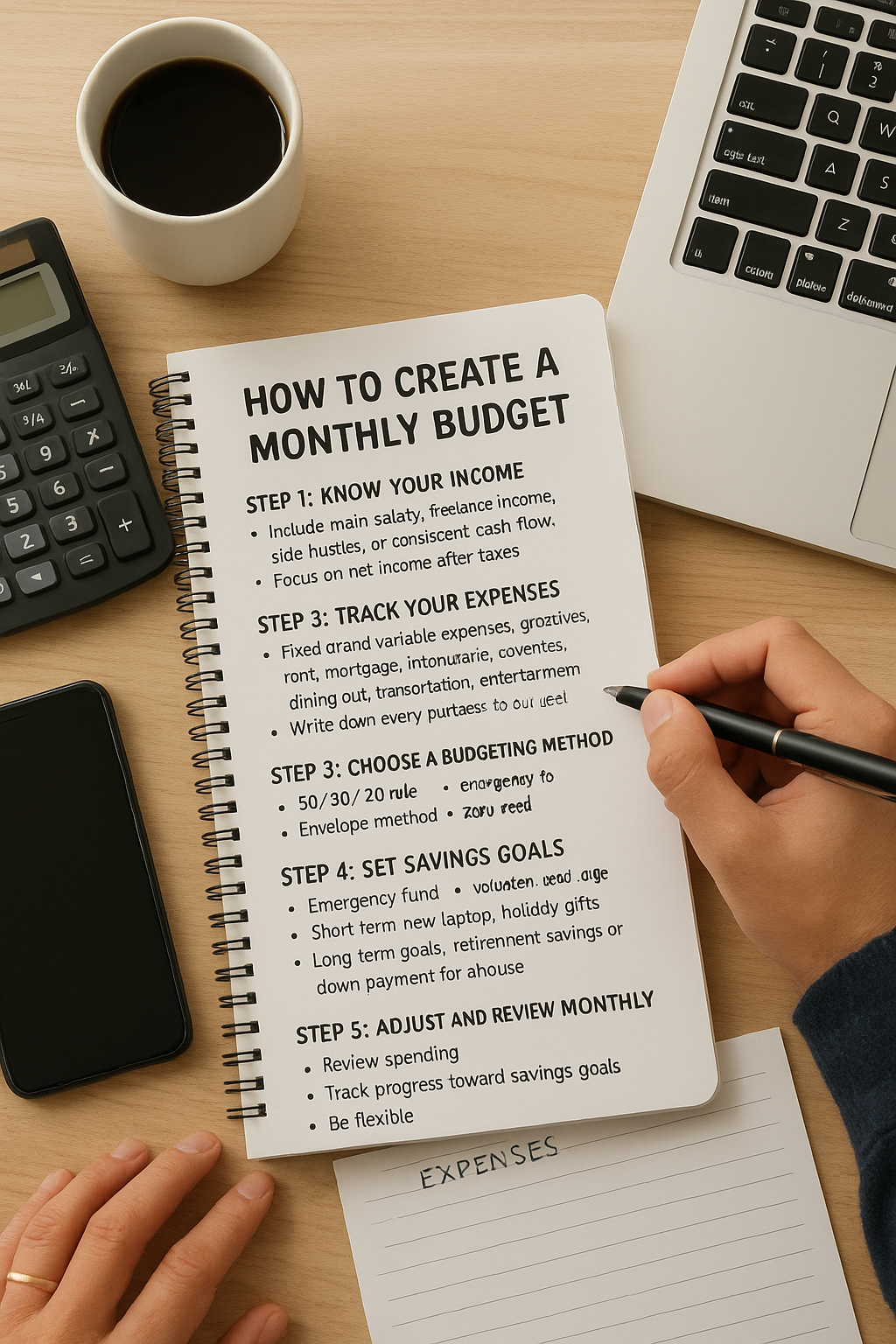
Budgeting is one of the most important tools for financial success. It gives you a clear picture of your income, expenses, and savings, helping you avoid overspending and stress. Many people believe creating a budget is complicated, but in reality, a simple plan is enough to take control of your finances. Here’s how to build an easy, effective monthly budget step by step.
Step 1: Know Your Income
The first step is to determine exactly how much money you earn each month.
- Include your main salary, freelance income, side hustles, or any consistent cash flow.
- Focus on net income (after taxes), since that’s the money you actually have to spend.
Having a clear view of your income ensures your budget is realistic and achievable.
Step 2: Track Your Expenses
To know where your money goes, you must track it. Start by listing all your fixed and variable expenses:
- Fixed expenses: rent, mortgage, insurance, utilities, subscriptions.
- Variable expenses: groceries, dining out, transportation, entertainment.
For one month, write down every single purchase. Use a notebook, spreadsheet, or a budgeting app. This will help you see spending patterns and identify areas where you can save.
Step 3: Choose a Budgeting Method
There are several approaches to budgeting, but three simple ones work best for beginners:
- 50/30/20 rule:
- 50% of income → needs (housing, bills, groceries).
- 30% → wants (hobbies, entertainment, dining out).
- 20% → savings and debt repayment.
- Envelope method: Assign cash for each spending category. Once it’s gone, you stop spending.
- Zero-based budget: Assign every dollar of income to a purpose (spending, saving, or debt). At the end, your balance is zero.
Choose the method that fits your personality and lifestyle.
Step 4: Set Savings Goals
A budget is not just about paying bills — it’s about preparing for the future.
- Start with an emergency fund: at least 3–6 months of essential expenses.
- Add short-term goals: a vacation, new laptop, or holiday gifts.
- Focus on long-term goals: retirement savings or a down payment for a house.
Treat savings like a bill you must pay every month.
Step 5: Adjust and Review Monthly
Your budget is not set in stone. Each month, review your spending and make adjustments.
- If you overspent in one category, balance it out the next month.
- Track progress toward your savings goals.
- Be flexible — life changes, and your budget should adapt.
Tips to Make Budgeting Easier
- Automate bills and savings so you don’t forget.
- Use free budgeting apps like Mint, YNAB, or EveryDollar.
- Avoid impulse buys by waiting 24 hours before making a non-essential purchase.
- Review weekly instead of monthly — it helps catch mistakes early.
Final Thoughts: Budgeting as a Tool for Freedom
A monthly budget doesn’t restrict you — it gives you freedom. Freedom to spend without guilt, to save for dreams, and to prepare for emergencies. The key is to keep it simple, realistic, and consistent. Over time, budgeting will become second nature, and you’ll feel more confident about your money.
Remember: the goal isn’t perfection, it’s progress. Even a basic budget can put you on the path to financial stability and long-term success.